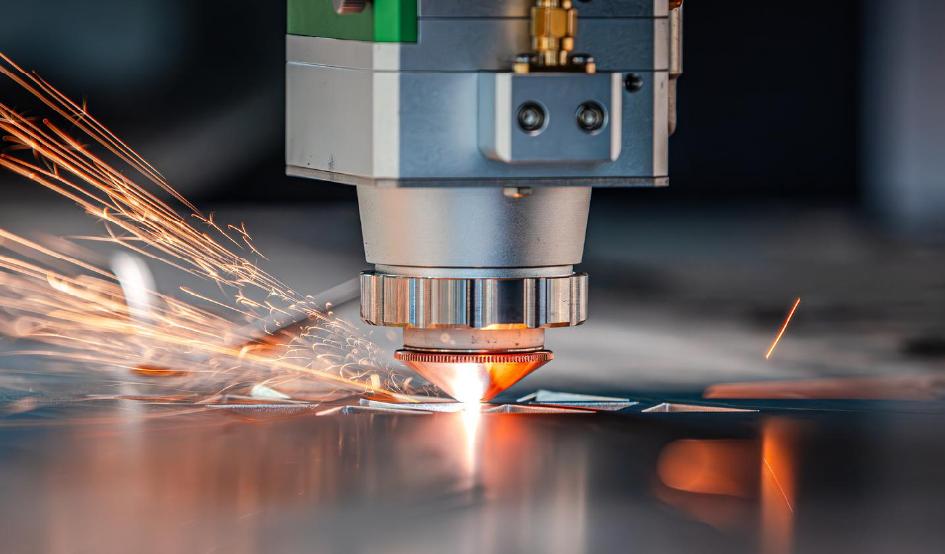
The Ultimate Maintenance Guide for Laser Cooling Systems: Preventive Care & SOP
-
July 31, 2026

-
6 min read

In high-precision industrial processing, thermal stability is directly correlated with operational profitability. Whether operating a high-power fiber laser cutting machine or a multi-axis robotic laser welding machine, the laser source relies on a constant temperature to maintain spatial mode stability, power consistency, and wavelength precision.
An unmaintained cooling system introduces thermal fluctuations that accelerate optical degradation, alter beam quality, and cause catastrophic lens cracking. Establishing a structured laser cooling system maintenance framework minimizes unexpected downtime, lowers energy consumption, and extends the operational lifespan of both the chiller compressor and the laser cavity.
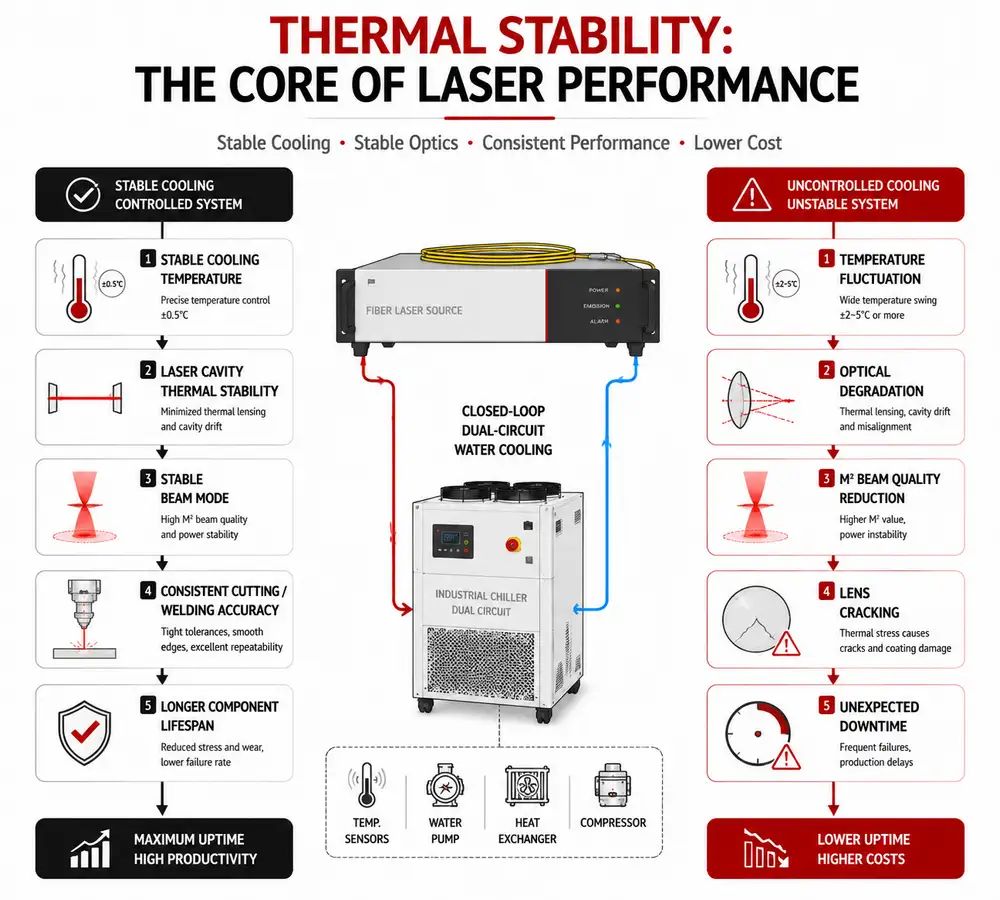
Preventive maintenance must follow a disciplined, time-based protocol. The matrix below defines standard maintenance intervals for industrial dual-circuit chillers.
| Interval | Inspection Area | Action Required | Target Parameter |
| Daily | Fluid Level & Temp | Inspect water level sight glass; record supply / return temperature. | Temperature within of setpoint. |
| Weekly | Air Filter Screen | Remove and clean dust mesh over air intake fins. | Free airflow; zero visible dust blanketing. |
| Monthly | Water Quality / Conductivity | Test fluid conductivity with a calibrated meter. | for Fiber / UV; for . |
| Quarterly | Hydraulic Loop & Filters | Flush water tank; replace PP cotton particle filter and DI resin cartridge. | Delta pressure across filters . |
| Annually | Refrigerant & Condenser | Deep clean condenser fins with air blow-back; check refrigerant pressures. | Compressor operating within factory pressure curves. |
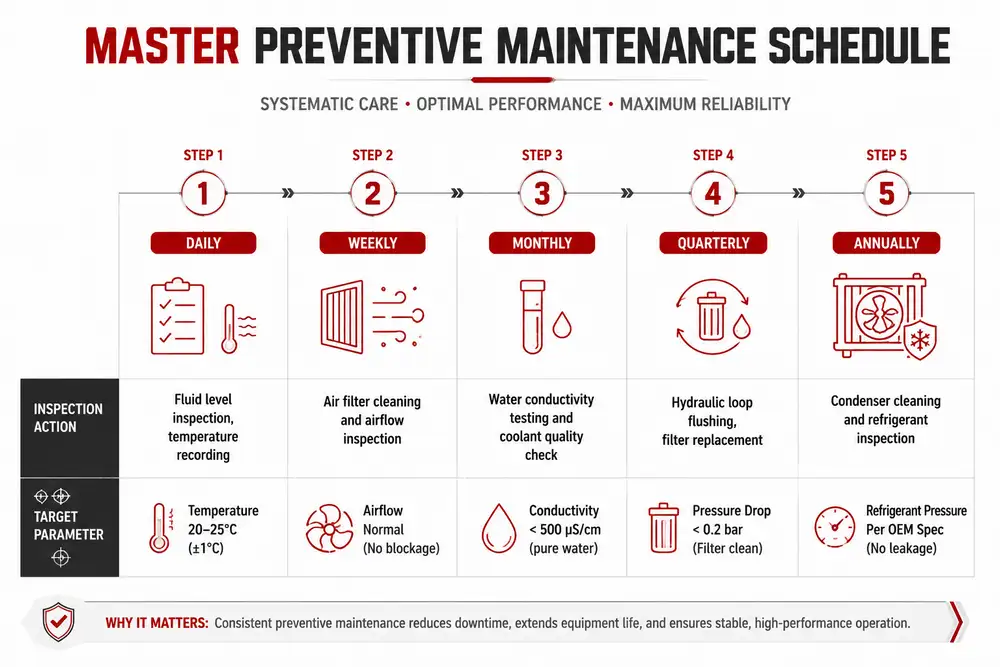
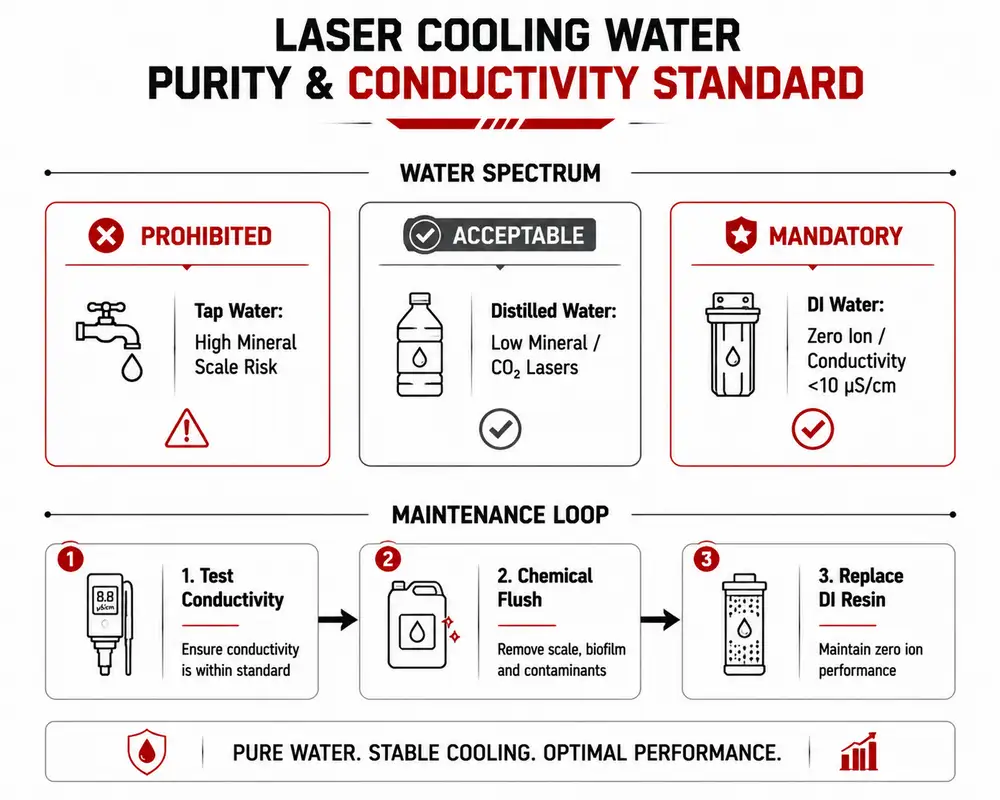
The recirculating fluid inside a laser cooling system acts as both a thermal conductor and a dielectric barrier. Using untreated municipal tap water introduces calcium, magnesium, and chloride ions that form insulating scale inside micro-channel cold plates.
To prevent fluid degradation:
For step-by-step instructions on purging scale build-up and selecting fluid media, check out our detailed Laser Cooling Water Flushing SOP.
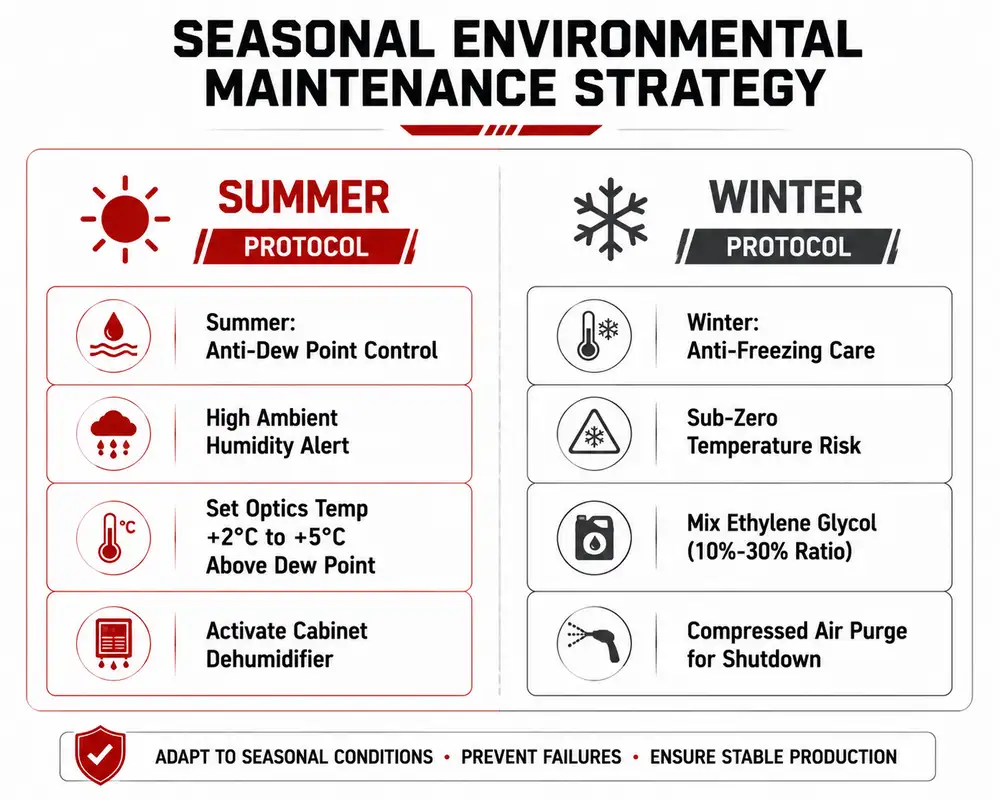
Industrial ambient conditions vary dramatically between seasons. Cooling system maintenance must adapt to prevent environmental damage:
For exact glycol mixing ratios and dew-point calculation charts, refer to our guide on Seasonal Laser Cooling Care & Antifreeze Protocols.
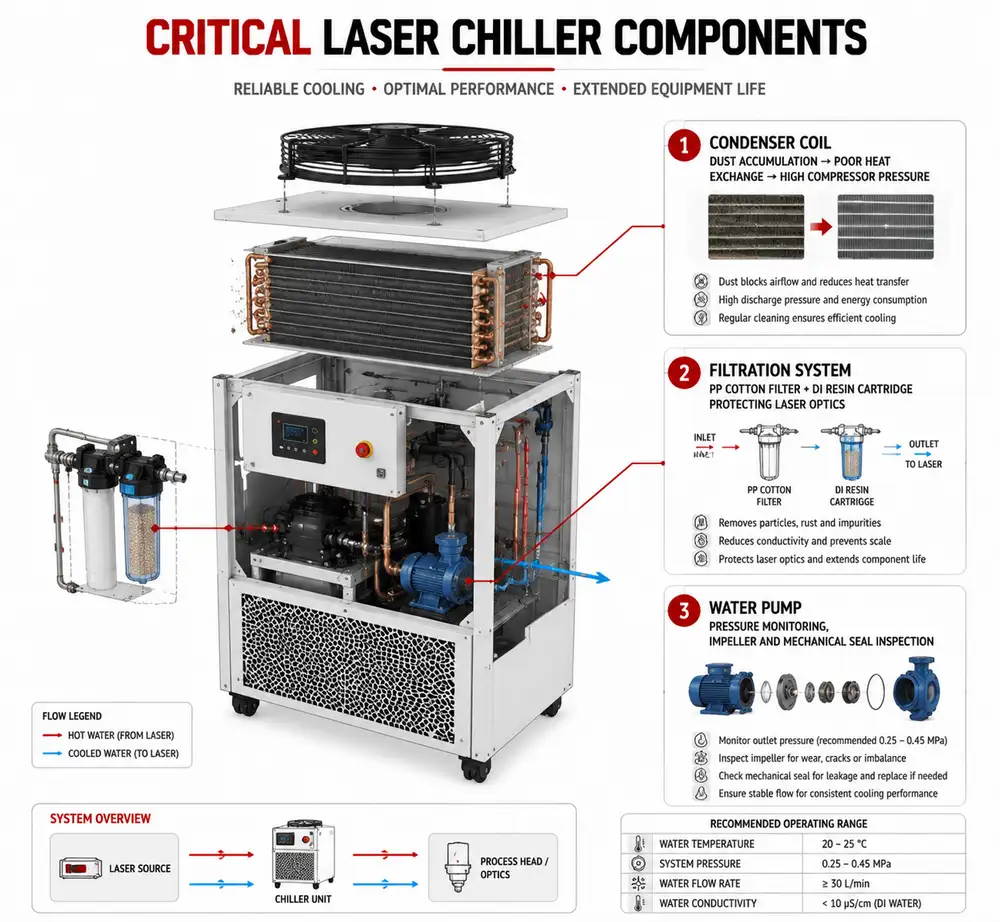
A laser chiller's thermal exchange efficiency depends on the mechanical health of three core components:
Learn how to clean internal components in our guide on Laser Chiller Component Maintenance.
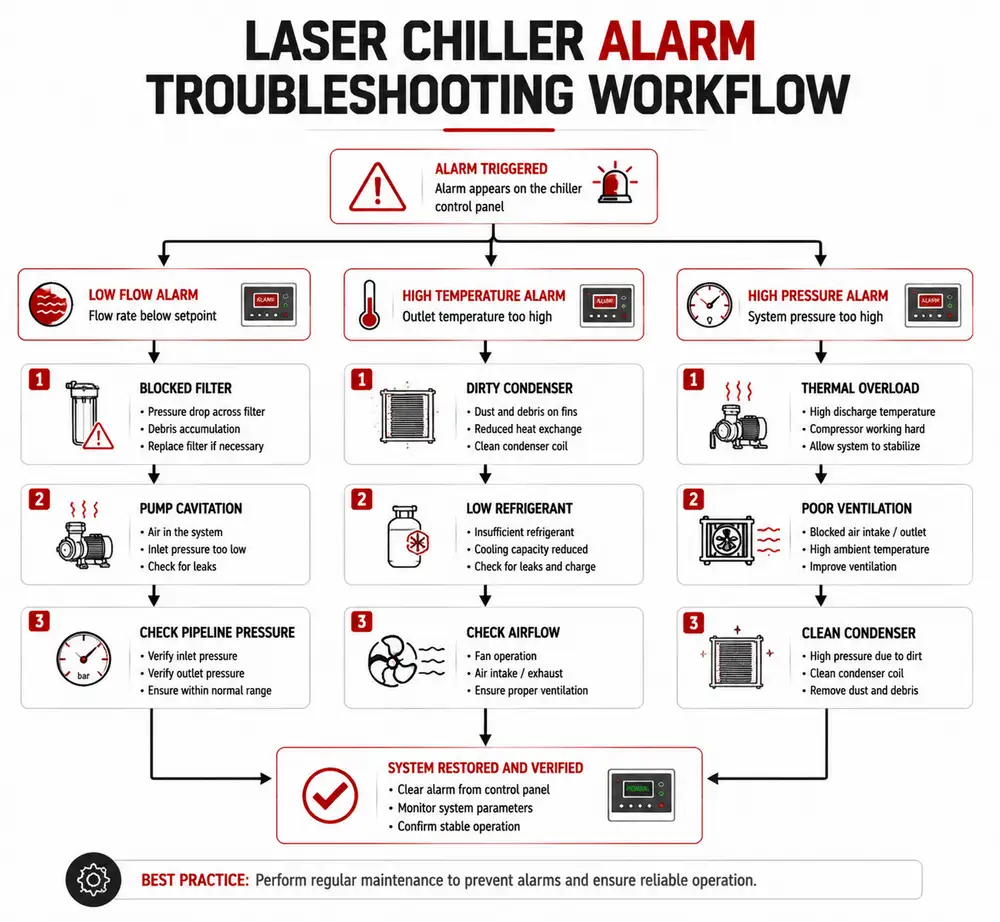
Modern industrial chillers use built-in diagnostic interlocks to protect the laser source. When an alarm triggers, immediate action is required to prevent heat-induced diode failure.
To resolve active fault codes and sensor errors, read our guide on Laser Chiller Troubleshooting & Alarm Code Resolution.
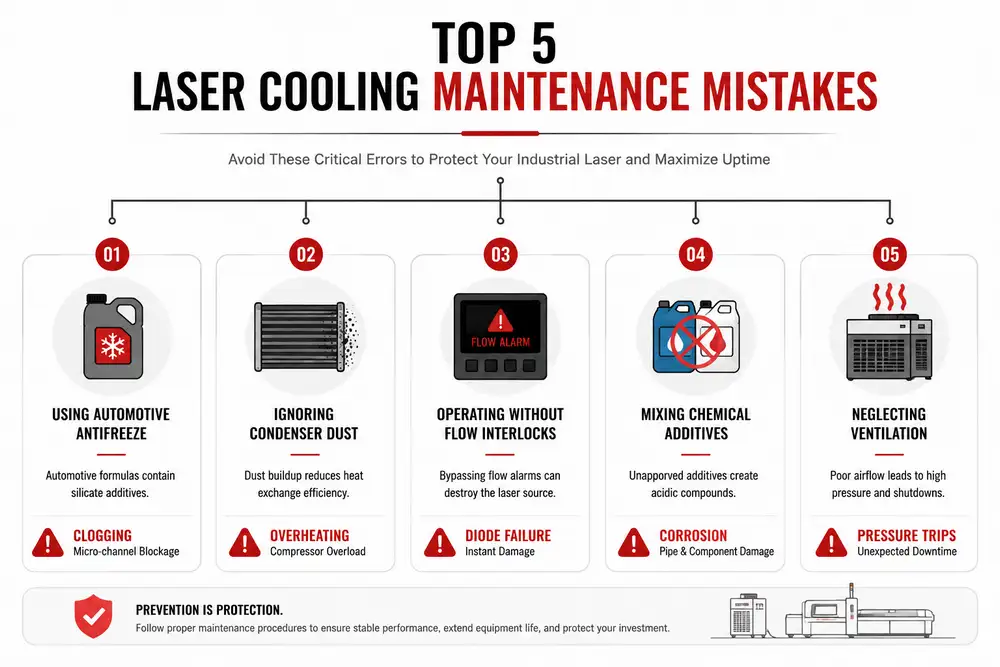
Different laser systems impose unique demands on cooling circuits:
A rigorous laser cooling system maintenance program is an investment in machine uptime, beam quality, and component longevity. By adhering to routine daily checks and executing structured quarterly servicing, plant managers can eliminate unscheduled downtime and maintain peak processing accuracy.
Q1: How often should I change the cooling water in an industrial laser chiller?
Cooling water should be flushed and replaced every 1 to 3 months depending on the operating environment. High-dust factory floors or systems using standard distilled water require monthly changes, whereas sealed systems with high-grade DI water can extend up to 3 months.
Q2: Can I use standard tap water if I boil or filter it first?
No. Boiling or standard mechanical filtering does not remove dissolved calcium, magnesium, or chloride ions. These minerals precipitate inside the laser cold plate, forming thermal scale and causing localized overheating.
Q3: What is the ideal operating temperature for a fiber laser water chiller?
Most fiber lasers require a dual-circuit setup: for the laser source (to prevent diode degradation) and for the optical processing head (to prevent lens condensation).
Q4: Why is fluid conductivity so important in laser cooling circuits?
High electrical conductivity in coolant water can cause electrical current leakage across high-voltage components or laser diodes, resulting in short circuits, galvanic corrosion, and component destruction.
Q5: What should I do if my laser chiller displays a high-pressure alarm?
Immediately inspect the ambient airflow around the chiller, clean dust from the condenser fins and filter mesh, verify that the exhaust fan is spinning, and ensure room temperatures are below .
To further optimize your laser cutting operations and deepen your engineering knowledge, explore these related technical resources:





English

French

German

Hindi

Italian

Japanese

Korean

Portuguese

Russian

Spanish
Tell us about your manufacturing challenges.
Our engineers will design a laser solution tailored to your exact requirements.